
"Yemen irrigation"
200 article(s) found

Taste characteristics of Panamanian coffee beans an introduction to the manor by grinding scale treatment in the producing area
Panamanian coffee beans taste characteristics of regional grinding scale treatment manor introduction taste is easy to leave an impression, so it is used as an indicator of the taste of deep-roasted coffee. For example, when a coffee bean is to be roasted deeply, French roasting is used! To get such instructions, as long as it is specified that it is a little bitterer than Peru, ah, the taste, ah, everyone will immediately have a common understanding.

Introduction of Coffee from 53 Coffee producing areas in the World (4)
thirty-one. Rwanda quality coffee comes from washed Arabica beans, which has a unique and perfect flavor. Rwanda (Rwanda) coffee is absolutely high quality in terms of its washed Arabica beans. As far as Africa is concerned, its coffee industry stands out because the country thrives mainly by producing the best possible beans. The taste of Rwandan coffee is described as a grassy aroma

What are the two major varieties of coffee? what are the differences in the characteristics of Vietnamese Robusta coffee beans?
Professional coffee knowledge exchange more coffee bean information please follow the coffee workshop (Wechat official account cafe_style) front street-Robusta coffee beans introduce the two most important coffee trees in coffee production are Arabica and Robusta. Arabica coffee beans come from the mountains of Yemen and account for about 2/3 of the world's coffee production. In addition, the highlands in the southwest of Ethiopia and Belgium, the Soviet Union

The method of Grinding and Calibration of Iron pickup Coffee beans Flavor description introduction of varieties in manor area
The Grinding scale treatment of Iron pickup Coffee beans Flavor description of the Manor Variety introduction in 1892, French Catholic missionaries left such a legend. He entered the Zhukula missionary, built a local church and introduced the habit of drinking coffee to the village of Zhukula. He personally planted a coffee forest and taught local villagers to grow, drink and sell coffee.

Yunnan Tieka Coffee Bean Flavor description method Variety characteristics and taste introduction
In recent years, the local government is also fully aware of the importance of the protection and development of ancient coffee varieties in Yunnan, and regards coffee as a key industry for protection and development. The finance of Binchuan County allocates 100000 yuan of support funds every year to build a century-old coffee brand of Zhu Kula. Yang Tiwu, director of the economic office of Pingchuan town, also breeds as a seedling of Zhu Kula coffee.

Coffee varieties Coffee beans Grinding thickness
The taste of coffee generally includes three aspects: smell, taste and taste. There are 18 kinds of odors: animal, ash, coke, chemicals, chocolate, caramel, roasted sweet potato, earth, flowers, fruit, grass and vegetables, almonds, sour rot, rubber, spicy, tobacco, wine, wood. The most basic flavors are

How did coffee get into life, and how did coffee become a daily drink?
More information on coffee beans Please follow Coffee Workshop (official Wechat account cafe_style) Mocha has nothing to do with chocolate. In 1708, de la Roque and three ships of the French East India Company arrived at the port of Mocha in Yemen, becoming the first Frenchman to sail around the southern tip of Africa into the Red Sea. They took the risk and spent a year sailing such a long distance

Coffee beans taste variety introduction
Coffee taste generally includes three aspects: smell, taste and taste. There are 18 kinds of smells: animal smell, soot smell, burnt smell, chemical smell, chocolate, caramel smell, baked sweet potato smell, earthy smell, flower smell, fruit smell, grass vegetable smell, almond smell, sour smell, rubber smell, spicy smell, tobacco smell, wine smell, wood smell. The most basic flavor is

The taste of coffee the method of making coffee
The taste of coffee generally includes three aspects: smell, taste and taste. There are 18 kinds of odors: animal, ash, coke, chemicals, chocolate, caramel, roasted sweet potato, earth, flowers, fruit, grass and vegetables, almonds, sour rot, rubber, spicy, tobacco, wine, wood. The most basic flavors are

How many kinds of coffee beans are there in the taste of coffee?
The taste of coffee generally includes three aspects: smell, taste and taste. There are 18 kinds of odors: animal, ash, coke, chemicals, chocolate, caramel, roasted sweet potato, earth, flowers, fruit, grass and vegetables, almonds, sour rot, rubber, spicy, tobacco, wine, wood. The most basic flavors are
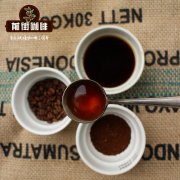
Which producing area is Essekopadot? what are the flavor and taste characteristics of coffee beans?
For more information on coffee beans, please follow the front street of the coffee workshop (Wechat official account cafe_style)-Sidamo Kebado Water washing G1 introduce a Kebado from Ethiopia, from the famous Sidamo producing area. Most coffee growers in Ethiopia belong to the small-scale peasant economy. For example, the fresh fruit of this batch of coffee is made up of 600.
What kind of coffee is Essekobado? what are the flavor and taste characteristics of coffee beans?
For more information on coffee beans, please follow the front street of Coffee Workshop (Wechat official account cafe_style)-Sidamo Copado washing G1 introduce this coffee bean called Corbal, which is washed from the famous Sidamo producing area of Kebado in Ethiopia. Most of Ethiopia's coffee cultivation belongs to the small-scale peasant economy, such as this batch of coffee.
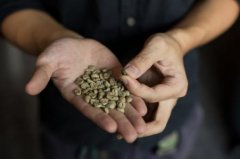
A brief introduction to the treatment method of grinding degree and baking degree of red top coffee iron card fine coffee beans
Iron pickup, also known as the old variety of small-grain coffee, its yield is less, cultivation is difficult, so the price is much higher than ordinary small-grain coffee. Tibica coffee, native to Ethiopia and southeastern Sudan, is the most widely cultivated variety of coffee in the Western Hemisphere. The plant is stronger, but not light-tolerant, and the yield is higher in Hawaii. The top leaf of Tibika is red and copper, which is called red top coffee. Tibica (T

Japan, a big coffee country in the world: a detailed introduction to the comparison of Humanity coffee brands in Japan
If we think about it carefully, we have no idea about the coffee words we use inadvertently on weekdays. Why mix different coffee beans? What is the purpose of roasting coffee beans? A cup of mellow, rich layers, bitter sweet coffee after all how to refine? What is the common connection between the world's most prestigious coffee bean producers? Let's follow in Mr. Matsuura's footsteps.
Coffee culture
Raj, an Arab doctor in the tenth century, wrote the earliest written records about coffee, but the cultivation of coffee dates back to 575 AD. Arabica, the best variety of coffee, came from Ethiopia. In the 15th century, southern Arabs in the Yemen region began to plant seedlings from Ethiopia in 1615, and began to spread coffee culture to the whole soil of Europe, starting from Pennesia. Of course, that strength was set off everywhere.

How many kinds of coffee beans are there?
Colombian coffee beans are of neat quality and can be called the standard beans among coffee beans. The bean shape is too large, with light green, has a special thick flavor, and is widely favored by people for its rich and unique aroma. Its taste is sour with sweet taste and low bitterness. Generally speaking, medium-deep roasting will make the taste more personalized, not only as a single drink, but also as a mixed coffee. Brazil
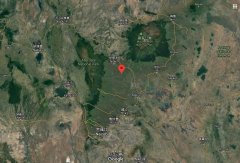
Kenya Camugani processing Plant introduces the characteristics of Kenyan SL28 and SL34 coffee beans
Features of the Camugani processing Plant the Camugani processing Plant (Ruthaka Kamuchuni) is located in central Kenya, between the Aberdare Mountains and the Kenyan Mountains, at an altitude of about 1650-1700 meters, about 100km to the southwest to the capital Nairobi. Camugani treatment plant was established in 1987, under the Ruthaka FCS cooperative system, Zhou

What is indigenous coffee in Ethiopia? What is Ethiopian coffee?
Professional coffee knowledge exchange More coffee bean information Please pay attention to the coffee workshop (Weixin Official Accounts cafe_style) coffee diffusion, shuttle between the northern and southern hemispheres But its footprint in its birthplace is also quite delicate. Ethiopia is located in East Africa. Its territory is divided from southwest to north by the Great Rift Valley of Africa: the mountains in the west are believed to be the source of coffee; the mountains in the east are believed to be the source of coffee;

What is the intermediate barista SCA barista certificate? I sort out the somewhat abnormal intermediate barista exam.
On the last question yesterday [I sorted out the examination questions for intermediate baristas (part 1), 99% chose D, most people will think of lavazza's painting style, and one fan analyzed: the painting is the smile of the Mona Lisa, it is well known that Leonardo da Vinci is Italian, and only lavazza is an Italian brand.
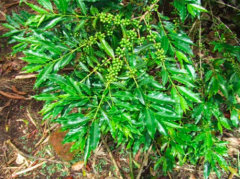
Coffee World Map-- Coffee tradition and planting pattern in Ethiopia
For professional baristas, please follow the coffee workshop (Wechat official account cafe_style) in the Bible. In Genesis, Adam and Eve are expelled from the Garden of Eden for eating the fruit of the tree of wisdom. There is no doubt that this fruit has been recognized as an apple (snake) fruit when I read books when I was a child. But in fact, the Bible never mentioned its name; the first coffee tree happened to be related to the earliest human fossils (Ardi)